



USA: Alisal Fire Grows in Santa Barbara County, Prompting New Evacuation Warning
The Alisal Fire in Santa Barbara County doubled in size between Tuesday and Wednesday, prompting officials to issue a new evacuation warning.
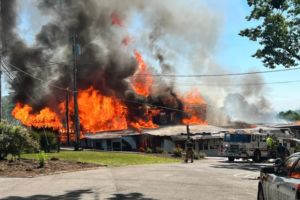
The fire grew to about 15,442 acres by Wednesday afternoon, with 5% of it contained, according to fire officials. The Alisal Fire, which sparked Monday afternoon near the Alisal Reservoir just south of the tourist town of Solvang, has so far burned through a sparsely populated area home to ranches and livestock. It also forced officials on Monday to close part of the 101 freeway along the state’s coastline after the fire jumped over the highway.
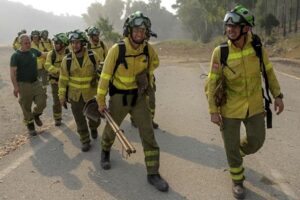
Evacuation orders and warnings, as well as the closure of part of Highway 101, were still in place Wednesday as 1,300 firefighters worked to contain the flames. The evacuation orders and warnings affect more than 500 residents, according to Santa Barbara County estimates. The California Highway Patrol in Santa Barbara said there was no estimate on when that part of the freeway would reopen.
County supervisors declared a local emergency at a board meeting Tuesday to make more resources available for containment efforts and asked California Gov. Gavin Newsom to declare a state of emergency for the county.
“The Alisal Fire is causing a threat to people and property within the county of Santa Barbara, necessitating all resources necessary be utilized to respond,” said Bob Nelson, chair of the Santa Barbara County Board of Supervisors.
Mr. Newsom said Wednesday local agencies working on the fire will be able to receive financial assistance from the Federal Emergency Management Agency for up to 75% of costs.
Gusty winds and dense, dry vegetation have fueled the fire’s rapid growth, officials say. The bone-dry shrubs, bushes and grass in this part of the state are easily combustible. The area doesn’t have an extensive history of wildfire, which means old, dead material is also a factor, said Andrew Madsen, a public information officer with Los Padres National Forest. At the same time, drought in the West has exacerbated conditions.
Fire officials say the explosive growth of these fires has become a new normal, forcing firefighters to adjust their strategies.
“You’ve got this changing climate, which is really quickly changing a lot of the former conceptions that we had about fighting fire and how fire behaves,” Mr. Madsen said. “The fire is doing things that a few years ago we would’ve thought was unheard of. But now it’s almost becoming a routine observance out here: if it’s got the fuels and if it’s got some wind on it, it can just go nuts and it can move in all different directions.”
A wind advisory from the National Weather Service will be in effect in parts of Santa Barbara County Wednesday afternoon until early Thursday morning, with north winds of 20 to 30 miles an hour, and gusts as strong as 50 miles an hour possible.
Firefighters were working to protect homes and historical sites in the area, control the blaze enough to reopen parts of the freeway, and slow its growth into more densely populated areas, officials said. Firefighters hoped to use the calmer weather Wednesday morning to their advantage before wind was slated to pick back up in the afternoon, Mr. Madsen said.
Strong winds on Monday meant firefighters couldn’t use aircrafts to spray fire retardant, a common tactic to try to contain flames. They were able to do so by Tuesday afternoon, spending hours in the afternoon dropping fire retardant in the area, Mr. Madsen said. By the afternoon, the fire began to move west toward the community of Gaviota, Mr. Madsen said.
Emergency personnel were stationed Wednesday at Reagan Ranch, or “Rancho del Cielo,” former President Ronald Reagan’s 688-acre vacation home in the Santa Ynez Mountains in Santa Barbara County, according to the Young America’s Foundation, the conservative group that preserves the ranch. The organization said it was working with firefighters to protect structures with fire retardant and have helped give them access to two nearby lakes for additional water resources.
The Alisal Fire is one of dozens of large fires burning 2.8 million acres in nine states, with the majority of blazes located in Idaho, California and Montana, according to the National Interagency Fire Center. Firefighters have so far faced an above-average season in some regions this year, with resources deployed this summer at levels not normally seen until later in the year.
September, October and November are often the peak months for fire activity in southern California due to drier conditions and gusty winds. As of Oct. 6, 7,883 fires have burned through more than 2.48 million acres in California, according to the most recent state and federal data. The five-year average over that same period is 7,312 fires and more than 1.2 million acres.
News Source: The Wall Street Journal