


Sweden: Gender neutral “recovery room” allows all firefighters to debrief after calls.
Community for all?
A group of Swedish architects in cooperation with the Swedish Network for Women in the Fire Services has created a new concept for washing up and changing after interventions.The new concept allows for individual privacy without needing to separate the teams while showering and relaxing after the calls.
The concept “Social Byggnorm 18” has now been developed into an actual building code which is to be considered every time a new fire station is built or being renovated in Sweden.
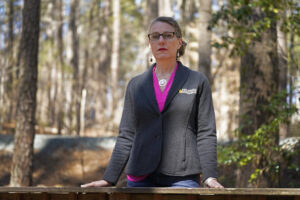
“This concept allows for everybody to participate in the important social bonding and informal de-briefing that often takes place after the intervention, while changing and showering”, says Mona Hjortzberg, a firefighters´advocate who has been working to improve women firefighters´conditions during most of her 20 year career in the fire service.
“While these informal “post intervention conversations” are important and often contribute to a sense of community, the “locker room talks” can also contribute to a sense of exclusion if the conditions for participation in them are unequal”, says Mia Albertsson, a firefighter with a background in architecture, and involved in the project since 2017.
Today, most fire stations have separate changing rooms for women and men. However, dividing changing rooms by gender is based on the idea that everyone is expected to feel safe and comfortable while changing and showering together with other other of the same biological sex. This is not always the case, and the reasons for it vary.
Another challenge with divided changing rooms is that there are still comparatively small numbers of women working as firefighters, and this unbalance becomes extra clear in the changing room.
A lot of time is spent in this type of space, not just showering and changing. The changing room is also a place to “land” after interventions and training, it´s a room for fellowship and conversation. The conversations can be about everything from planning the day’s tasks or meals, to reflections from the call and exchange of lessons learned.
“This work started already 17 years ago. I was involved already from the beginning of this process, which revolved around how to improve the working environment at the fire station and turn it into an official social building code”, says Mona Hjortsberg, chair for the Swedish Network for Women in Fire & Rescue Services (KIRTJ.se) and also the co-chair of the CTIF Commission for Women in Fire & Rescue.
Mona Hjortsberg is a firefighter with 30 years of service, a female firefighters´ advocate and lately also a union representative. She has spent more than two decades of her working career on finding ways to improve several issues affecting female firefighters. One of her important projects have been creating a heat resistant sports bra which can could be used under turnout gear (by both women and men). Her network has also worked on methods and tools to make door breaking easier without needing to rely only on muscle power.
“While working on these issue we also started to discuss how we could improve the inclusion of female firefighters at the fire station. Many of the women experienced a disconnect when coming back from a call, knowing that the conversations, the sharing and bonding among the male firefighters would continue in their locker room, while the women – sometimes perhaps only one per shift – would have to shower and change alone, in a separate space”, says Mona Hjorzberg.
Read Full article at: https://www.ctif.org/index.php/news/new-swedish-gender-neutral-recovery-room-concept-separated-showers-allow-male-and-female
Source: CTIF