


Siberia: People told to avoid work due to severity of smoke caused by Europe fires
The head of a Siberian region has declared Friday a non-working day and urged residents to stay at home as smoke from raging forest fires raise health concerns.
In recent years, wildfires have ripped across Russia’s vast territory at an unprecedented scale that experts blame on climate change, negligence and underfunded forestry management services.
The head of Yakutia – Russia’s largest and coldest region that has been hard-hit by wildfires this year – said Thursday that the day off would apply to the regional capital Yakutsk and several other districts.
“Smoke from the fires has an extremely negative effect on people’s well-being,” Aisen Nikolayev said, in remarks carried by the RIA Novosti news agency.
“In order to minimise these consequences, today I signed a decree declaring tomorrow a non-working day for 11 municipalities,” he added.
Mr Nikolayev recommended that residents spend the day at home.
Area size of Portugal burned
Earlier this week, President Vladimir Putin ordered reinforcements to fight the Siberian fires and sent the head of the emergencies ministry to Yakutia to oversee the operations there.
In the vast and sparsely populated region, blazes have so far burned through more than 9.2 million hectares (22.7 million acres) – an area the size of Portugal – according to Russia’s forestry agency.
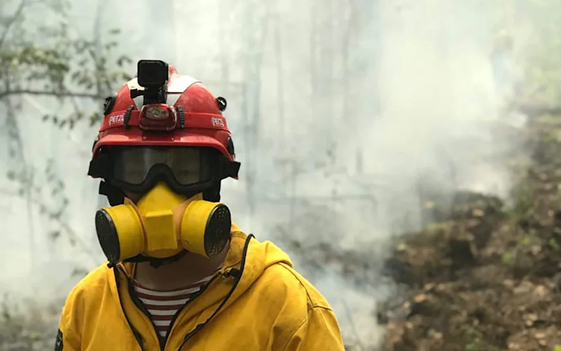
Employees of the Aerial Forest Protection Service (Avialesookhrana) battle a forest fire in the taiga. – TASS
During a visit to Yakutia last month, local firefighters said that they lacked the people, equipment and resources to deal with the scale of the wildfires.US space agency NASA over the weekend said its satellite images showed wildfire smoke from Yakutia travelling to the North Pole, calling it a first in history.
Italy sees 500 blazes overnight
Italian firefighters on Thursday battled hundreds of fires throughout the country’s south that have killed four people, fueled by unrelenting temperatures enveloping southern Europe.
Firefighters said there were over 500 blazes reported overnight as the anticyclone dubbed Lucifer sweeps across Italy, sending temperatures soaring and causing what is believed to be a new European record of 48.8 degrees Celsius (119.8 Fahrenheit) in Sicily on Wednesday.
The searing heat is due to continue in Italy for several days and risks fueling fires that have already plagued much of the country’s south in recent weeks, notably in Sicily and the region of Calabria.
Greece bats down flames
Fires burning for over a week that caused Greece’s worst ecological disaster in decades were finally placed under control Friday, the fire department said.
“As of yesterday, there is no major active front, just scattered pockets,” a fire department spokesman told AFP.
Rain and falling temperatures helped the fire-dousing effort, but crews remain on alert for possible flare-ups in hard-to-access ravines on the island of Evia and in the region of Arcadia in the Peloponnese, the spokesman added.
But with high winds forecast for the weekend, the bulk of a huge multinational force that assisted Greek firefighters this week remains in place, civil protection spokesman Spyros Georgiou said.
‘Worst ecological disaster in decades’
Hundreds of homes and many businesses have been destroyed in Evia, Arcadia and the outskirts of Athens in the prolonged fire wave that struck Greece from late July and intensified last week, during the worst heatwave in decades.
Prime Minister Kyriakos Mitsotakis on Thursday described the infernos as Greece’s “greatest ecological disaster in decades”.
Spain and France on high alert
The hellish weather in southern Europe is being caused by an anticyclone from North Africa. This area of high pressure and extreme heat is also known as a heat dome and has recently been seen in the US as well.
So how does it work? When high pressure lingers for several days, it traps hot air and compresses it. Coupled with the warmth of the sun, it effectively works like a lid on a pot, cooking up blistering temperatures.
The heatwave began to shift west on Thursday, with many of France’s southern areas put under a high temperature alert.
Spain and Portugal went on alert for wildfires as three new blazes broke out in Spain’s north, even as flames continued to sweep across northern Algeria, Tunisia, and Greece – a series of extreme weather events experts say are intensified by climate change.
Heatwaves have become more likely due to climate change, scientists say. As global temperatures rise over time, heatwaves are predicted to become more frequent and intense, and their impacts more widespread.
Europe will have to brace for summer temperatures of 50C in future, the Met Office has warned.
News Source: The Telegraph