


Fire, tsunami, pandemic: how to ensure societies learn lessons from disaster
In this episode of The Conversation Weekly: when catastrophes like a pandemic strike, how do we make sure societies learn – and implement – lessons from disaster? We talk to three researchers coming at this question in different ways.
First, a story from northern Australia about how Indigenous knowledge that can help to prevent natural disasters has been with us for thousands of years.
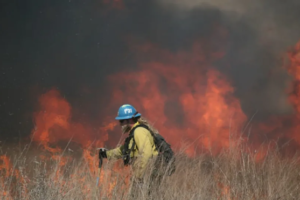
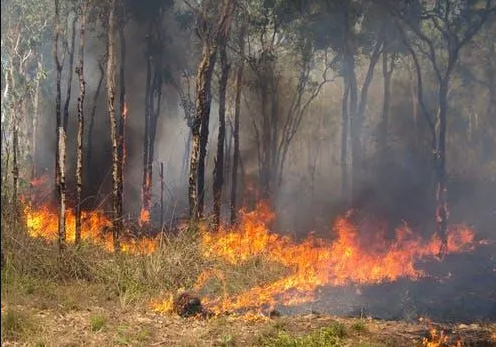
The savannah landscape of northern Australia is prone to huge, destructive wildfires, which are a significant contribution to the country’s greenhouse gas emissions. Indigenous peoples know how to manage fire in the north by lighting smaller fires at particular times of year.
We speak to Kamaljit Sangha, senior ecological economist at the Darwin Centre for Bushfire Research at Charles Darwin University in northern Australia. She’s part of an innovative collaboration that’s scaling up the use of this Indigenous knowledge to reduce large wildfires in the north and tackling climate change at the same time. “It’s led to this innovative carbon economy which is now worth about AU$30 million to AU$40 million (£16 million to £21 million) across the north per year,” Sangha explains.
Second, what happens when a country with a long history of preparing for disasters, faces something it didn’t predict.
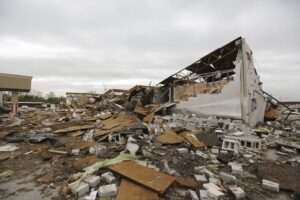
Located at the site where four seismic plates meet, Japan is a country that’s had its share of disasters, and it’s very good at preparing for them. Elizabeth Maly, associate professor of international research at the Institute of Disaster Science at Japan’s Tohoku University tells us that “Japan is really strong at preparing for a repeating event,” but that “doesn’t translate into flexibility of response or thinking”. Yet, flexibility is what’s needed when facing a complex, completely unpredictable disaster.
This podcast is part of a series on recovering from the pandemic in a way that makes societies more resilient and able to deal with future challenges. It is supported by PreventionWeb, a platform from the UN Office for Disaster Risk Reduction. Read more of the coverage here.
Third, we focus on how to use the recovery from a disaster like the pandemic as a catalyst for change. Ian Goldin, professor of globalisation and development at the University of Oxford, recently published a book called Rescue about how to use the current crisis to make a better world. He’s optimistic about the future, if both governments and their citizens seize the moment to make real change. “The old orthodoxy has to be permanently thrown out the window, not temporarily,” says Goldin.
And Julius Maina, east Africa editor at The Conversation in Nairobi, recommends some analysis of this week’s crucial election in Ethiopia.
Source: Yahoo News